Have you ever faced the challenge of selecting the right flash dryer for your production needs? You’re not alone. With thousands of manufacturers claiming superiority and technical specifications that seem to blend together, making this critical investment decision can feel overwhelming. The truth is, choosing the wrong flash dryer can cost your operation millions in wasted energy, maintenance headaches, and production inefficiencies. But get it right, and you’ll unlock significant competitive advantages through improved product quality, reduced operating costs, and enhanced production capabilities.
In this comprehensive guide, we’ll walk you through everything you need to know about selecting a flash dryer that perfectly aligns with your specific requirements. From understanding the fundamental principles of flash drying technology to evaluating crucial performance metrics, we’ve got you covered with expert insights that will transform your decision-making process.
Table of Contents
What Is a Flash Dryer and How Does It Work?
Before diving into selection criteria, let’s establish a clear understanding of flash dryers and their operating principles. Flash dryers, also known as pneumatic dryers, represent a sophisticated drying technology designed for rapid moisture removal from particulate materials.
The Basic Principle
Flash drying operates on a simple yet effective concept: wet material particles are dispersed in a high-velocity, heated air stream. This creates an environment where:
- Extremely rapid heat transfer occurs between the hot air and individual particles
- Moisture evaporates almost instantaneously (hence the term “flash”)
- Dried particles are transported through the system and collected separately from the exhaust air
The entire drying process typically happens in seconds rather than minutes or hours, making flash dryers remarkably efficient for specific applications.
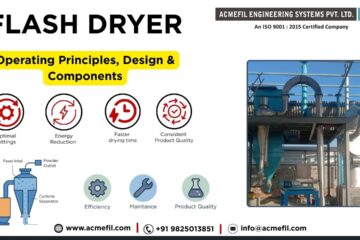
Key Components of a Flash Dryer System
A standard flash dryer system consists of several critical components:
- Feed mechanism – Controls the introduction of wet material into the drying chamber
- Air heater – Raises the temperature of process air to the required level
- Drying chamber/duct – Where the actual drying process occurs
- Particle separation system – Usually a cyclone or bag filter that separates dried product from exhaust air
- Air handling system – Fans and ducts that manage airflow throughout the process
- Control systems – Monitors and adjusts operating parameters for optimal performance
Understanding these components and how they interact gives you the foundation needed to evaluate different flash dryer options intelligently.
8 Critical Factors to Consider When Selecting a Flash Dryer
Making an informed flash dryer selection requires careful analysis of several crucial factors. Let’s examine each one in detail.
1. Material Characteristics
The properties of your material will significantly influence which flash dryer design works best. Consider these essential characteristics:
- Initial moisture content: Higher moisture materials may require longer residence times or multi-stage drying
- Particle size and distribution: Affects heat transfer efficiency and transport behavior
- Material density: Impacts required air velocity and energy requirements
- Heat sensitivity: Determines maximum allowable air temperature
- Abrasiveness: Influences material selection for system components
- Stickiness or cohesiveness: May require special design considerations to prevent buildup
Always provide potential suppliers with comprehensive material data, ideally including samples for testing. This ensures the selected dryer can handle your specific material effectively.
2. Production Capacity Requirements
Accurately defining your capacity needs is essential for proper flash dryer sizing. Consider not just current requirements but future expansion plans as well. Key questions to address include:
- What is your current production volume requirement?
- Do you anticipate scaling up production in the near future?
- Is production continuous or batch-oriented?
- Are there seasonal variations in production volume?
Remember that oversizing leads to unnecessary capital costs and operational inefficiencies, while undersizing creates bottlenecks and limits growth. Most manufacturers recommend selecting a dryer with 10-15% additional capacity beyond immediate needs to accommodate fluctuations and modest growth.
3. Energy Efficiency Considerations
In today’s competitive manufacturing environment, energy efficiency isn’t just environmentally responsible—it’s economically essential. Flash dryers consume significant energy, primarily in heating the process air. When evaluating options, look for:
- Heat recovery systems that capture and reuse thermal energy from exhaust air
- Advanced insulation to minimize heat losses
- Variable speed drives for fans to optimize energy consumption
- Intelligent control systems that adjust parameters for maximum efficiency
- Options for alternative energy sources (where applicable)
A more energy-efficient flash dryer may come with a higher initial price tag but will often deliver substantial savings over its operational lifetime. Calculate the total cost of ownership (TCO) rather than focusing solely on purchase price.
4. Space Constraints and Installation Requirements
Flash dryers, particularly those with high-capacity ratings, can have substantial spatial requirements. Assess your available space early in the selection process, considering:
- Vertical clearance needed (flash dryers are often tall systems)
- Access requirements for maintenance
- Expansion possibilities
- Integration with existing equipment and material handling systems
- Foundation requirements based on system weight and vibration factors
Some manufacturers offer compact designs specifically engineered for facilities with limited space. Discuss any constraints with potential suppliers to identify suitable configurations.
5. Material of Construction
The materials used to construct your flash dryer directly impact its durability, performance, and suitability for your application. Consider these factors:
- Product contact surfaces: Need to be compatible with your material (stainless steel is common for food and pharmaceutical applications)
- Corrosion resistance: Essential if processing acidic or corrosive materials
- Temperature tolerance: Must withstand maximum operating temperatures
- Wear resistance: Critical for abrasive materials
- Regulatory compliance: Food, pharmaceutical, and other regulated industries have specific material requirements
Higher-grade materials increase initial costs but often provide better longevity and reduced maintenance expenses over time.
6. Control Systems and Automation
Modern flash dryers incorporate sophisticated control systems that optimize performance and ensure consistency. Look for:
- Programmable logic controllers (PLCs) with intuitive user interfaces
- Remote monitoring and operation capabilities
- Automated adjustment of key parameters (temperature, airflow, feed rate)
- Data logging for quality assurance and process optimization
- Integration capabilities with plant-wide control systems
- Alarm systems for process deviations
Advanced control systems represent a worthwhile investment, providing better product consistency, reduced operator intervention, and valuable process insights that can drive continuous improvement.
7. Maintenance Requirements and Accessibility
Even the best-designed flash dryers require regular maintenance. Selecting a system with easy maintenance access and simplified service requirements reduces downtime and maintenance costs. Evaluate:
- Accessibility of key components for inspection and service
- Availability of spare parts and their cost
- Ease of cleaning (especially important for food and pharmaceutical applications)
- Service support from the manufacturer
- Maintenance intervals and associated labor requirements
- Self-diagnostic capabilities that identify potential issues before they cause failures
Request maintenance schedules and recommended spare parts lists from manufacturers to better understand long-term maintenance commitments.
8. Environmental and Regulatory Compliance
Flash dryers must operate within increasingly strict environmental regulations. Consider:
- Emissions control capabilities (particularly dust and volatile organic compounds)
- Noise levels during operation
- Compliance with industry-specific regulations (FDA, GMP, etc.)
- Energy efficiency certifications
- Sustainable manufacturing practices of the supplier
Ensuring your flash dryer meets or exceeds all applicable regulations prevents costly retrofits and potential production interruptions in the future.
Common Flash Dryer Types and Their Ideal Applications
Different flash dryer designs excel in specific applications. Understanding these variations helps narrow your selection to the most appropriate type for your needs.
Vertical Flash Dryers
Best for: Materials with larger particle sizes, applications with limited floor space
Key characteristics:
- Vertical orientation with bottom-to-top airflow
- Smaller footprint but greater height requirements
- Often more energy-efficient due to natural convection effects
- Typically provides longer residence time for thorough drying
Horizontal Flash Dryers
Best for: Heat-sensitive materials, applications with height limitations
Key characteristics:
- Horizontal orientation with end-to-end airflow
- Greater control over residence time
- Easier installation in facilities with height restrictions
- Often preferred for heat-sensitive materials requiring precise temperature control
Multi-Stage Flash Dryers
Best for: Materials with high initial moisture content, applications requiring temperature staging
Key characteristics:
- Sequential drying zones with different temperature profiles
- Allows for optimized energy usage
- Reduces thermal shock to sensitive materials
- Higher capital cost but better energy efficiency
Co-Current vs. Counter-Current Designs
Co-current systems (where material and air flow in the same direction) provide gentler drying suitable for heat-sensitive materials.
Counter-current systems (where material and air flow in opposite directions) maximize energy efficiency and are ideal for materials that can withstand higher initial temperatures.
How to Evaluate Flash Dryer Performance Metrics
When comparing flash dryer options, focus on these key performance indicators:
Specific Energy Consumption
Measured in kWh per kg of water removed, this metric directly impacts operating costs. Lower values indicate greater energy efficiency. Industry-leading flash dryers typically achieve values 15-30% below average.
Evaporation Rate
This indicates how much water the system can remove per hour, directly affecting production capacity. Verify that the stated evaporation rate applies to your specific material, as performance varies significantly based on material properties.
Residence Time
The duration material spends in the drying environment affects both product quality and throughput. Optimal residence time depends on your material characteristics and quality requirements.
Temperature Uniformity
Consistent temperature throughout the drying chamber ensures product uniformity. Superior systems maintain temperature variations within ±2-3°C throughout the drying zone.
Product Recovery Efficiency
This measures what percentage of processed material is successfully recovered as finished product. Higher-quality systems achieve recovery rates above 99%, minimizing product loss.
Flash Dryer Selection Process: A Step-by-Step Approach
Follow this methodical approach to select the optimal flash dryer for your application:
Step 1: Define Your Requirements Precisely
Create a detailed specification document that includes:
- Material characteristics (with samples if possible)
- Required production capacity
- Available utilities (electricity, steam, natural gas)
- Space constraints
- Budget parameters
- Timeline for implementation
Step 2: Research Potential Suppliers
Identify manufacturers with experience in your specific industry and application. Request references from similar installations and, if possible, arrange site visits to see comparable systems in operation.
Step 3: Request Detailed Proposals
Provide your specification document to selected suppliers and request comprehensive proposals including:
- Detailed system specifications
- Performance guarantees
- Installation requirements
- Commissioning procedures
- Warranty details
- Service and support options
- Complete pricing including ancillary equipment
Step 4: Analyze Life-Cycle Costs
Look beyond the initial purchase price to evaluate total ownership costs over the expected lifetime of the equipment, including:
- Energy consumption
- Maintenance requirements
- Spare parts costs
- Expected service life
- Resale value
Step 5: Pilot Testing
For critical applications or unique materials, request pilot-scale testing at the manufacturer’s facility or arrange for testing of a similar installation. The data gathered will provide valuable insights into how your material will perform in the proposed system.
Step 6: Final Selection and Implementation Planning
After selecting your preferred option, work closely with the supplier to develop a detailed implementation plan covering:
- Manufacturing timeline
- Shipping logistics
- Installation requirements
- Commissioning procedures
- Operator training
- Performance verification testing
Common Pitfalls to Avoid When Selecting a Flash Dryer
Even experienced professionals sometimes fall into these common traps when selecting flash drying equipment:
Overlooking Material Variability
Your material’s properties may change seasonally or between batches. Ensure the selected dryer can accommodate reasonable variations in moisture content, particle size, and other critical characteristics.
Focusing Solely on Purchase Price
The initial cost typically represents only 15-25% of the total lifetime expense of operating a flash dryer. A higher-quality, more efficient system often provides better value despite a higher purchase price.
Inadequate Pilot Testing
Skipping thorough testing with your actual material can lead to unpleasant surprises after installation. Never rely solely on manufacturer data without verification using your specific material.
Neglecting Future Requirements
Your production needs will likely evolve. Select a system that can accommodate reasonable growth or changes in product specifications without major modifications.
Underestimating Installation Complexity
Flash dryers require careful integration with existing systems and utilities. Factor in all associated costs, including foundations, ductwork, electrical connections, and control system integration.
Frequently Asked Questions About Flash Dryer Selection
How does material particle size affect flash dryer selection?
Particle size directly impacts heat transfer efficiency and transport behavior within the system. Smaller particles dry more quickly but may require more sophisticated collection systems. Most flash dryers work optimally with particles between 50-500 microns, though specialized designs can accommodate particles outside this range. Always provide detailed particle size distribution data to potential suppliers.
What are the typical energy sources for flash dryers?
Flash dryers commonly use natural gas, propane, electricity, or steam as heating sources. The optimal choice depends on local utility costs, availability, and environmental considerations. Some modern systems incorporate heat pumps or waste heat recovery to improve energy efficiency.
How do I determine the appropriate residence time for my material?
Residence time requirements depend primarily on initial moisture content, particle size, and temperature sensitivity. Laboratory testing with your specific material provides the most accurate determination. As a general rule, most materials require residence times between 0.5-3 seconds in properly designed flash dryers.
Can flash dryers handle heat-sensitive materials?
Yes, with appropriate design modifications. For heat-sensitive materials, consider systems with lower inlet temperatures, shorter residence times, or multi-stage designs that gradually reduce moisture content. Some manufacturers offer specialized “low-temperature” flash dryers specifically engineered for heat-sensitive applications.
What maintenance issues are most common with flash dryers?
The most frequent maintenance concerns include wear in high-velocity areas (particularly with abrasive materials), buildup of material on internal surfaces, filter maintenance, and thermal expansion issues. Regular inspection of critical components and preventive maintenance significantly reduces unplanned downtime.
Conclusion: Making the Right Flash Dryer Selection
Selecting the ideal flash dryer for your application requires careful consideration of numerous factors, from material characteristics to energy efficiency and maintenance requirements. By taking a methodical approach to the selection process, conducting thorough testing with your specific materials, and evaluating total lifecycle costs rather than just purchase price, you’ll make an informed decision that delivers value for years to come.
Remember that a flash dryer represents a significant long-term investment in your production capabilities. The time invested in proper selection pays dividends through improved product quality, reduced operating costs, and enhanced operational reliability. Work closely with experienced suppliers, leverage their application expertise, and never hesitate to request detailed testing before making your final decision.
By following the guidelines outlined in this comprehensive guide, you’re now equipped to navigate the flash dryer selection process with confidence and secure the optimal drying solution for your specific requirements.
Looking for advanced industrial drying solutions? Consider Acmefil Engineering Systems Pvt. Ltd. As an ISO 9001:2015 certified company established in 1992, Acmefil specializes in designing and manufacturing state-of-the-art flash dryers that deliver unmatched efficiency and product quality. With customized engineering to meet your specific process requirements, Acmefil’s flash dryers feature advanced control systems, energy-efficient designs, and exceptional durability. Join over 800 satisfied customers nationwide who trust Acmefil as their turnkey solution provider for industrial drying and concentrating equipment. Contact their expert team today to discuss how their flash dryers can optimize your production process.