
Flash dryers
Loose, crumbly wet solids are fed into a fast stream of hot air, carried up a drying duct and dried in seconds – continuous, simple and compact.
- Seconds of drying
- Continuous
- Simple, compact layout
Acmefil · flash dryer manufacturer since 2000
Wet solids ride a stream of hot air and leave dry in seconds – continuous, compact and simple to run. Flash and spin flash dryers designed and built by Acmefil in Ahmedabad.
Trusted by manufacturers of chemicals, pigments, agrochemicals and more























What is a flash dryer?
In a flash dryer, wet material is dispersed into a fast stream of hot air. Every particle is surrounded by hot air, so the moisture evaporates almost at once – in seconds – while the air carries the particles up the drying duct.
A cyclone separates the dry powder from the air and a bag filter cleans the exhaust. The result is a continuous, compact plant that is simple to run and gentle on heat-sensitive products.
Two flash dryers
A flash dryer for loose wet solids, a spin flash dryer for wet cake and paste – both built by Acmefil.
Loose, crumbly wet solids are fed into a fast stream of hot air, carried up a drying duct and dried in seconds – continuous, simple and compact.
Wet cake and paste are broken up by a rotor inside a swirling hot-air vortex and leave as dry powder – for feeds a plain flash dryer cannot disperse.
How they work
Wet product in, dry powder out. Pick a view and watch the particles ride the hot air.
Acmefil
Typical products: Starch, minerals, pigments, inorganic salts, fillers, chemical powders
Acmefil
Typical products: Pigment and dye cake, agrochemicals, chemical cake
Acmefil
Typical products: Chemical powders, minerals, pigments, starch, fillers
Dryer finder
Three quick questions for a starting point. If a flash dryer is the wrong tool for your feed, the finder says so.
Typical products:
General guidance only – the final choice depends on moisture, stickiness, heat sensitivity and capacity. We confirm it on your product data or in a pilot trial.
Compare
How the feed, drying time, product form and footprint differ – including when a fluid bed, spray or paddle dryer is the better choice.
| Flash dryer | Spin flash dryer | Fluid bed dryer | Spray dryer | Paddle dryer | |
|---|---|---|---|---|---|
| Feed | Loose, crumbly wet solids – powders, granules, pastes that disperse | Wet cake, filter cake and paste that are not free-flowing | Free-flowing granules, crystals and pellets | Pumpable liquids, slurries, solutions | Sludge, pastes, wet cake, slurries |
| How it dries | Particles carried in a stream of hot air through a drying duct | A rotor breaks the cake up in a swirling hot-air vortex | Hot air lifts the bed; vibration can move it along | Droplets atomized into a hot-air chamber | Indirect heat through hollow paddles and jacket |
| Drying time | Seconds | Seconds | Minutes | Seconds | Minutes to hours |
| Product | Dry powder, as fed | Fine, de-agglomerated powder | Dry, intact granules and crystals | Fine, free-flowing, often spherical powder | Granules or powder |
| Footprint | Tall duct, simple layout | Compact, vertical | Long, low body | Large chamber and tall structure | Long horizontal body |
| Main limit | Not for sticky or lumpy feed that will not disperse | Feed must be screw-conveyable | Feed must fluidize; fines need dust collection | Feed must be pumpable | Larger size per kg of water than flash drying |
| Typical products | Starch, minerals, pigments, inorganic salts, fillers, chemical powders | Pigment and dye cake, agrochemicals, chemical cake | Salts, crystals, pharma and food granules, fertilizers | Dyes, detergents, food and dairy powders, ceramics, pharma, herbal extracts | ETP and STP sludge, pigments, gypsum, salts, starch |
| Typical heating | Hot air – gas, oil, steam or electric heaters | Hot air – direct or indirect fired | Hot air – steam, electric, thermic fluid or gas-fired | Hot air – gas, oil, steam or electric heaters | Steam, thermic fluid or hot oil (indirect) |
Typical behaviour from industry practice; your product sets the real answer – use the dryer finder or send us your product data.
Applications
Powders, cakes and pastes across chemicals, pigments, agrochemicals and minerals – and where to go when your product needs another dryer.
Features & options
Every part is chosen for your product – from the feeder to the stack.
Screw feeder, rotary valve or pneumatic conveyor that meters wet material into the drying duct.
Gas, oil, steam or electric heater, sized to the air temperature your product allows.
Where the material is dispersed in the high-velocity air stream and the moisture evaporates in seconds.
For cake and paste: a rotor breaks the feed into fine particles so every particle meets the hot air.
Separate the dry powder from the air and keep fines out of the exhaust.
Induced draught fan and air lock rotary valves keep the flow steady and the discharge sealed.
PLC automation of air temperature, air flow and feed rate, with interlocks and alarms.
Mild steel or stainless steel contact parts to suit the product and the duty.
Our dryers
Real Acmefil flash and spin flash dryers – from the drawing board to the plant.
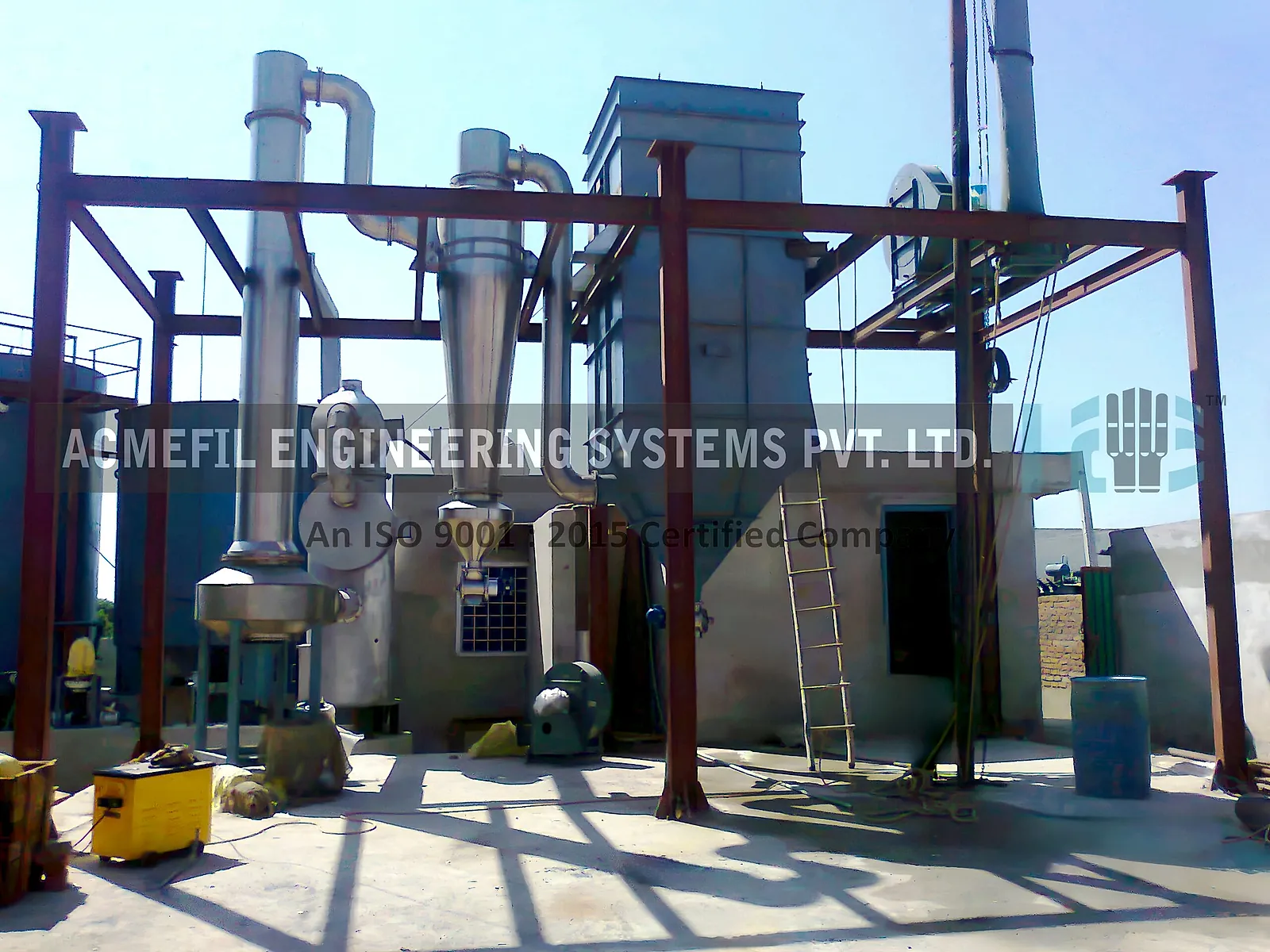
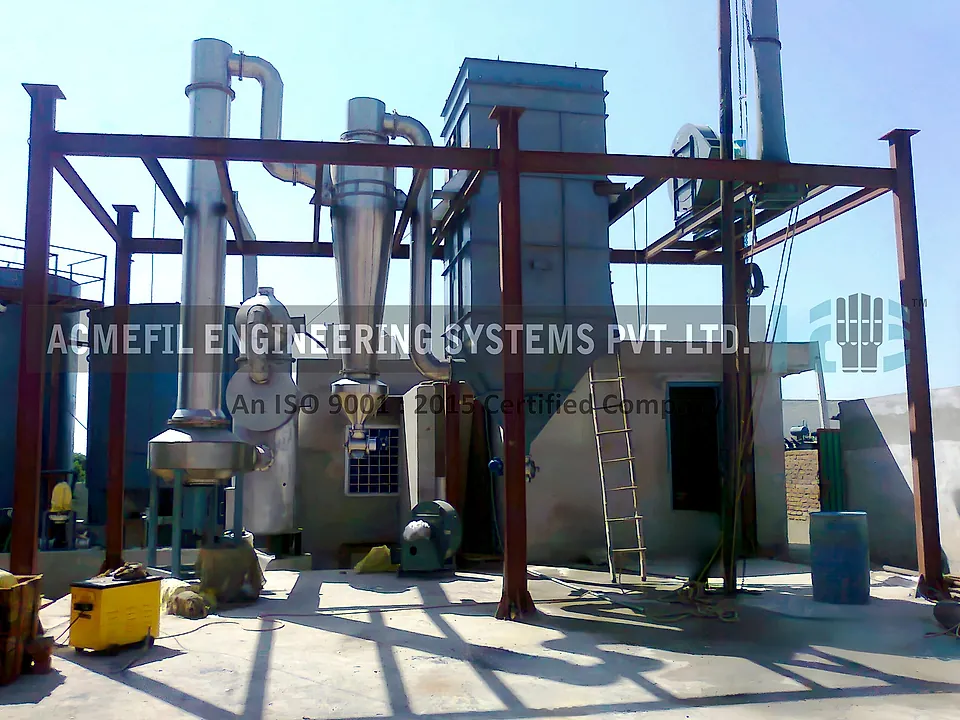
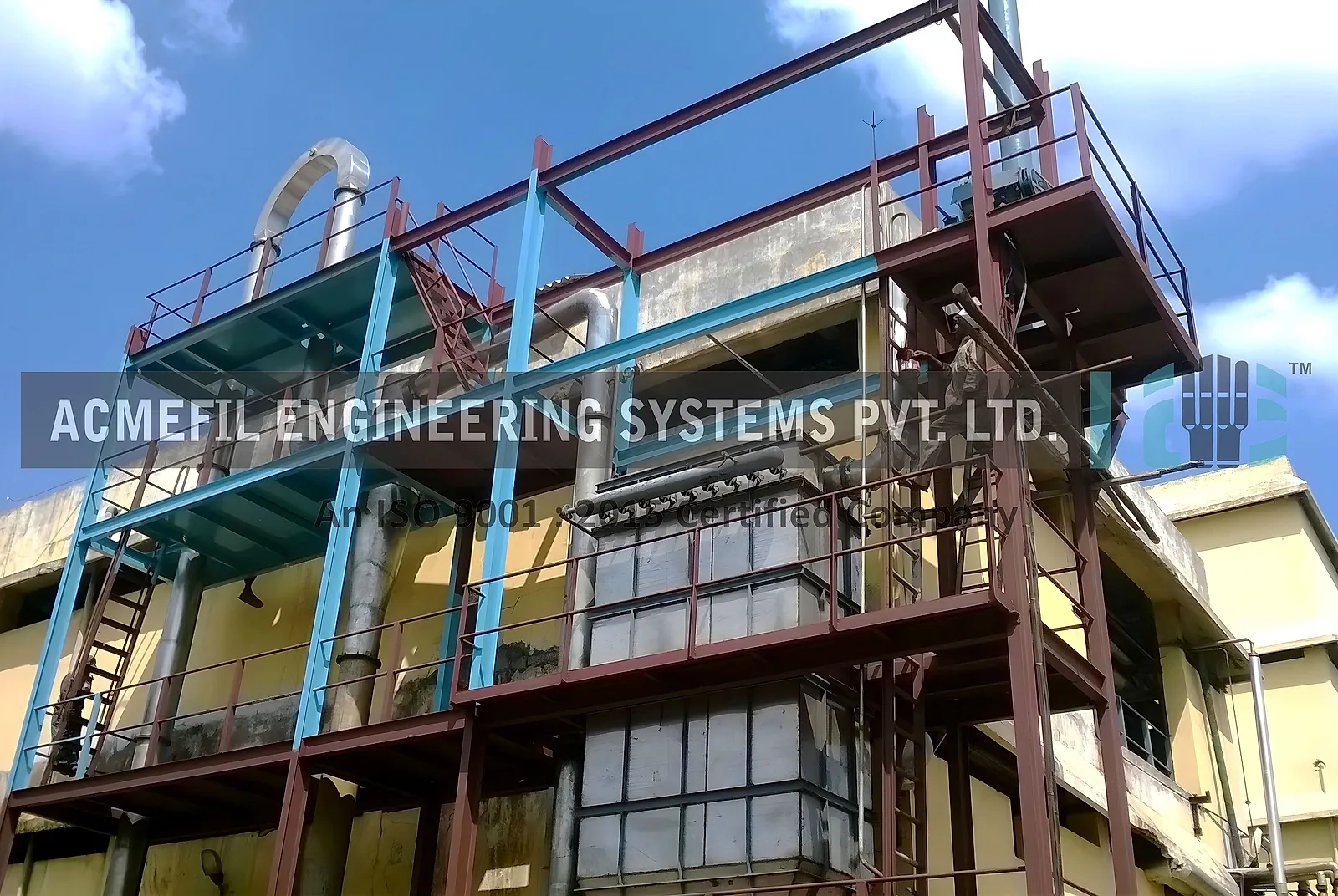 Flash dryer plantDrying duct, cyclone and bag filter on a steel structure
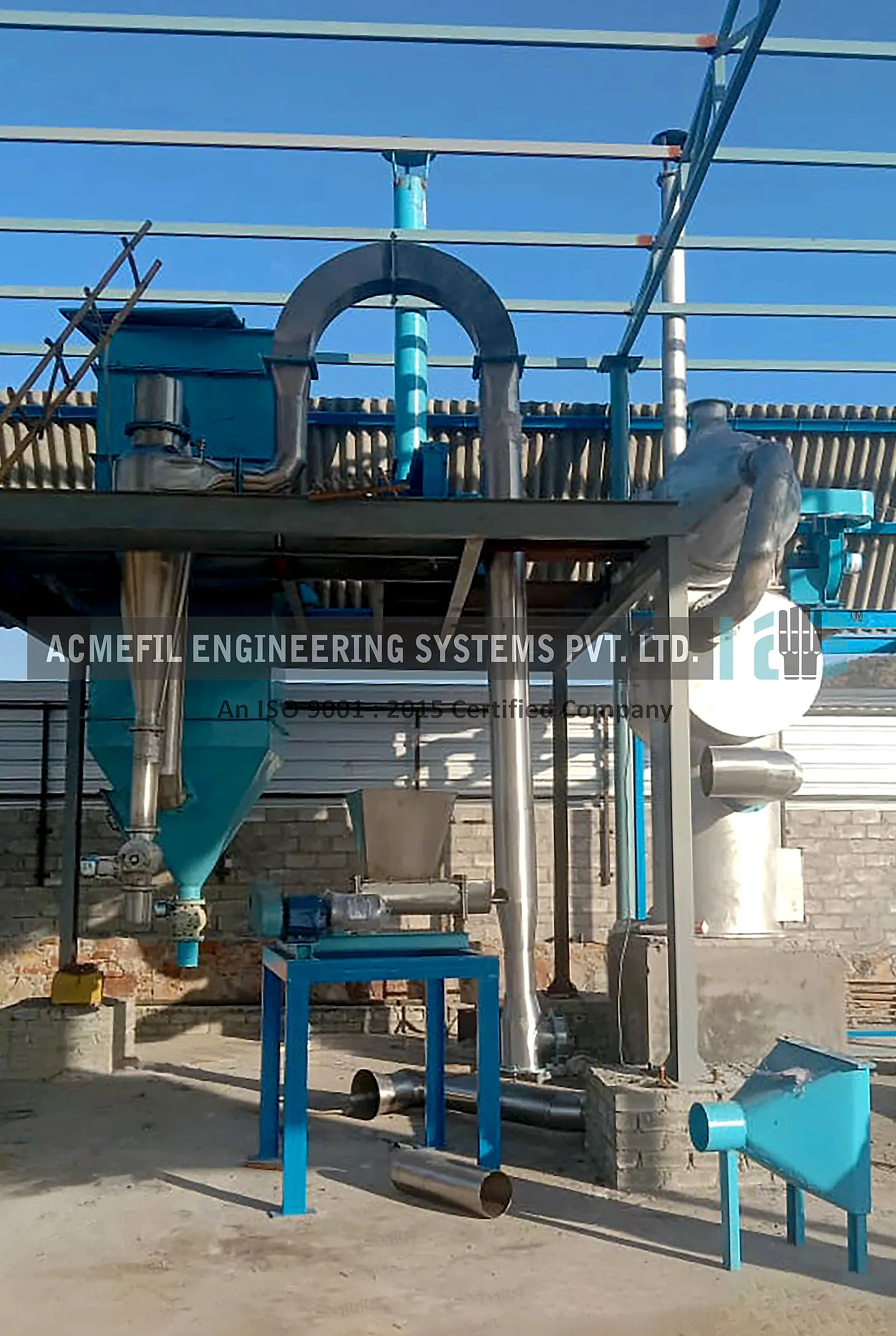
 Spin flash dryerDrying chamber, cyclone and ducting
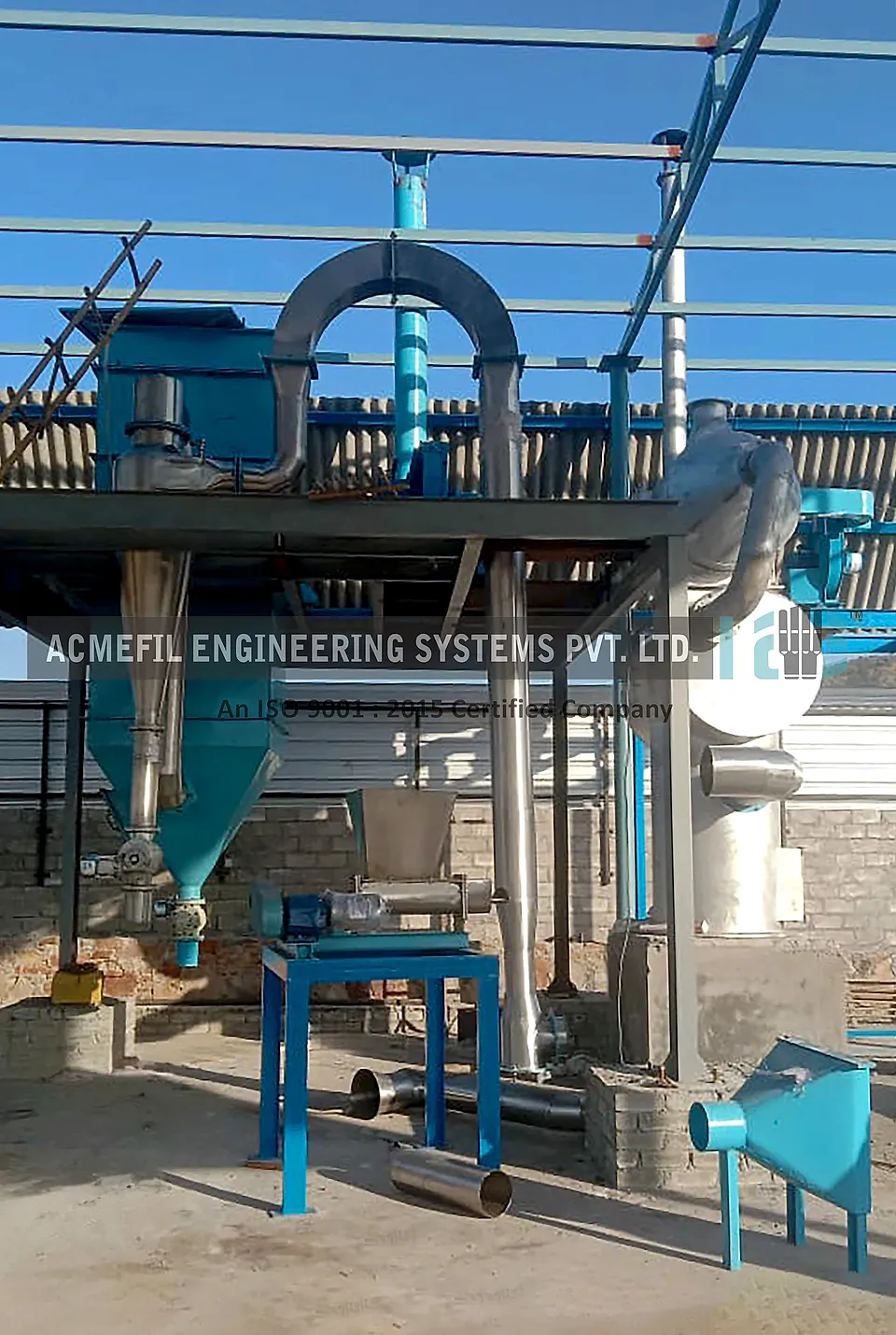
 Flash dryer cycloneScrew feeder and product discharge
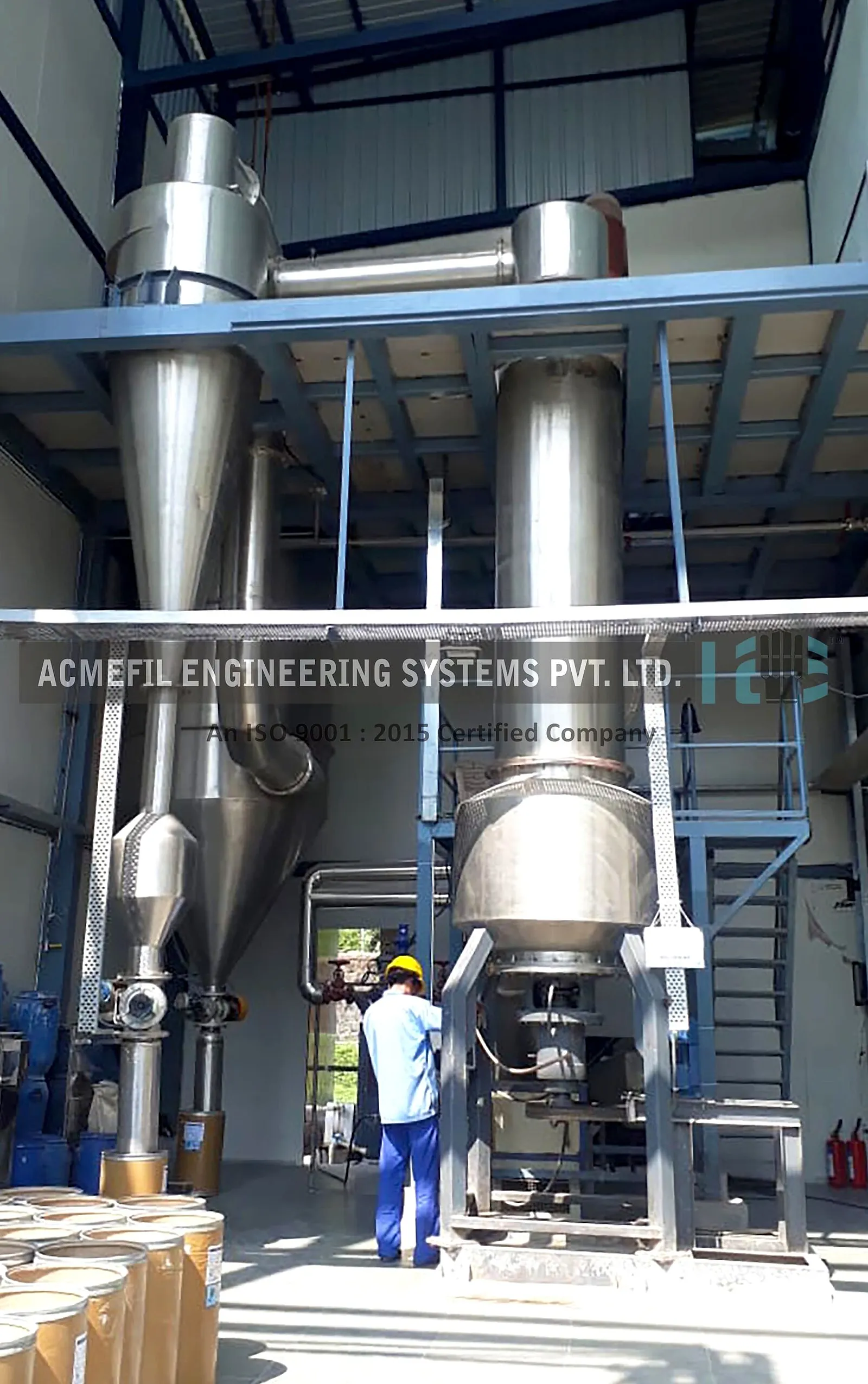 Spin flash dryer chamberInside the plant
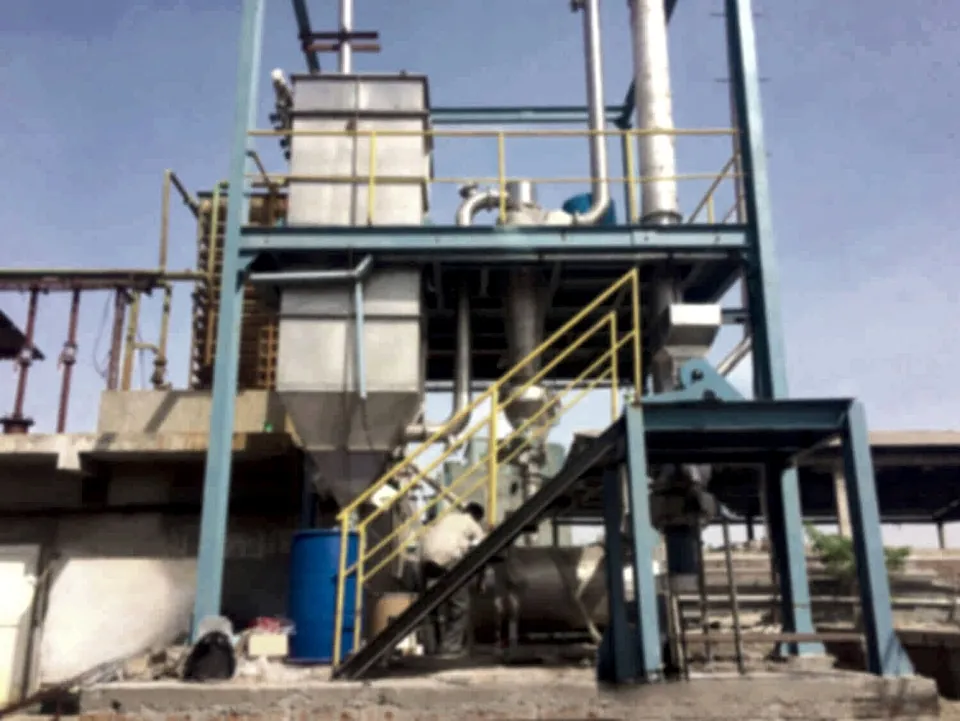 Spin flash dryer plantBag filter and feed hopper on a steel structure
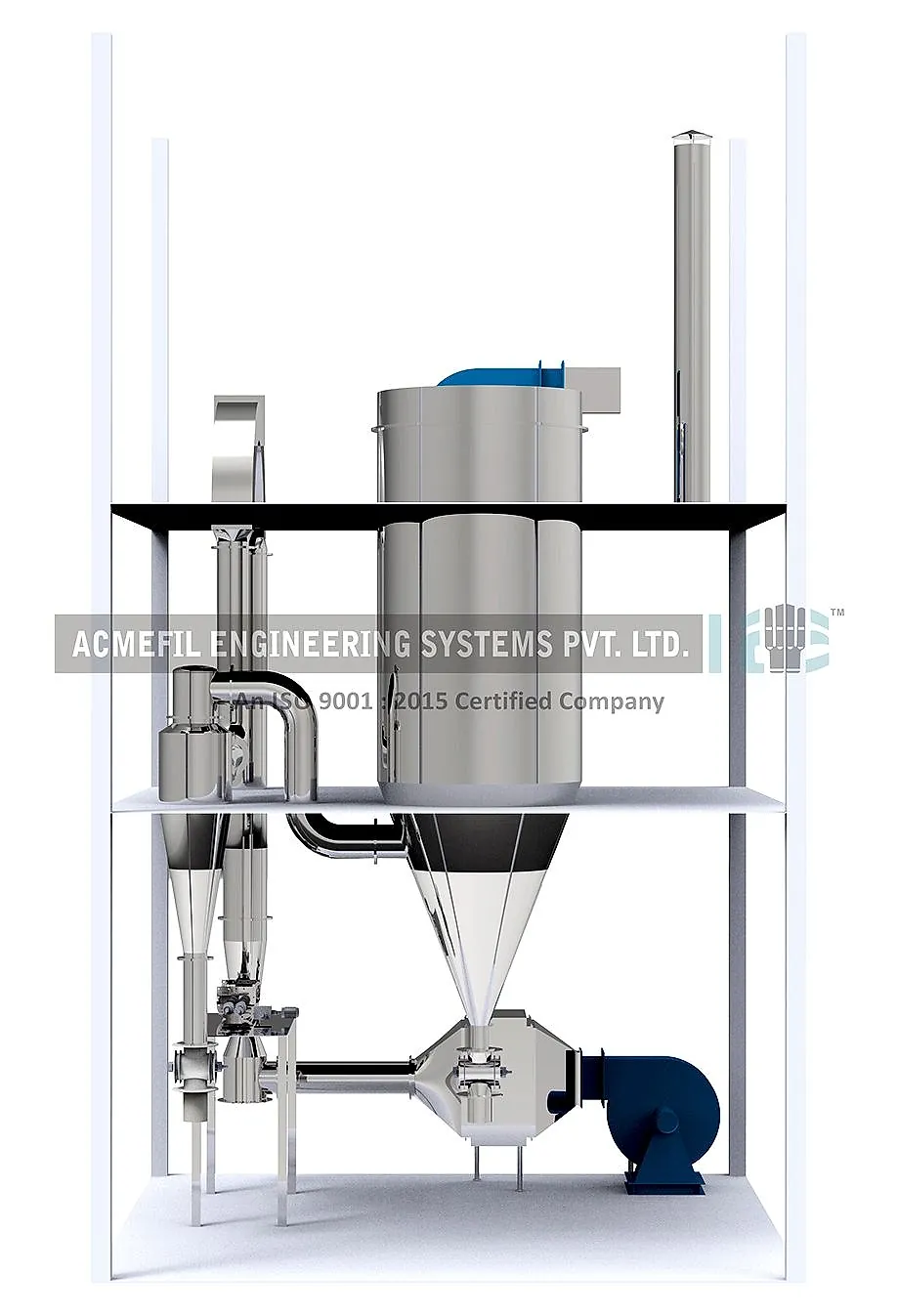 Flash dryer design3D model of the drying column, cyclone and platform
Pilot trials
Run your own wet powder, cake or paste on the 10 kg/hr flash or spin flash dryer in our Ahmedabad R&D centre. You hold the dried product in your hand, and we collect the data to size your industrial dryer.
Why Acmefil
FAQ
A flash dryer is a continuous dryer in which wet material is dispersed into a fast stream of hot air. The moisture evaporates in seconds while the particles travel up a drying duct, and a cyclone and bag filter then separate the dry powder from the air. Read our comprehensive guide or see the machine on acmefil.com.
A feeder – screw feeder, rotary valve or pneumatic conveyor – meters the wet solids into the duct. A heater (gas, oil, steam or electric) supplies hot air. The air carries and dries the particles in seconds, a cyclone collects the dry powder and a bag filter cleans the exhaust. The flash drying process guide goes through each step.
A flash dryer disperses loose, crumbly material in the air stream by itself. A spin flash dryer adds a rotor in a swirling hot-air vortex that breaks up wet cake and paste, so feeds that will not disperse on their own can still be dried in seconds. See flash dryers and spin flash dryers.
Loose, crumbly wet solids that disperse in air: chemical powders and inorganic salts, pigments, minerals and fillers, starch and similar ingredients. Our applications guide and the applications page on acmefil.com list typical products.
Feeds that will not fluidize or disperse. Granules and crystals dry better in a fluid bed dryer, a liquid or slurry in a spray dryer and sludge in a paddle dryer from our sister company AS Engineers. Wet cake and paste need a spin flash dryer. The dryer finder points you to the right one.
Often yes: the product is in the hot air for seconds only, and the air temperature is set to what the product can take. We confirm the settings on a sample or in a pilot trial. See how to select a flash dryer.
Knowledge hub
 Flash Dryer · 11 min readFlash Dryer Investment Guide: Complete Cost Analysis and Comparison with Other Drying MethodsThe global industrial drying equipment market reached $4.2 billion in 2023, with flash dryers accounting for nearly 15% of this…
 Flash Dryer · 13 min readFlash Dryer Maintenance and Troubleshooting: Common Fixes That Actually WorkWhen your flash dryer suddenly stops performing at peak efficiency, the panic sets in fast. Production schedules hang in the…
 Flash Dryer · 13 min readFlash Dryer Systems: Complete Guide to Design, Components and Operating PrinciplesFlash drying technology removes moisture from materials in seconds rather than hours, revolutionizing industrial drying processes across multiple sectors. Understanding…
 Flash Dryer · 11 min readSelecting a Flash Dryer: What to Know – The Complete GuideHave you ever faced the challenge of selecting the right flash dryer for your production needs? You’re not alone. With…
 Flash Dryer · 12 min readApplications of Flash Dryers: Industrial Uses: The Ultimate GuideHave you ever wondered how certain powdery products maintain their perfect consistency? Or how industries efficiently dry massive quantities of…
 Flash Dryer · 13 min readFlash Drying Food: The Ultimate Guide to Speed, Quality, and EfficiencyHave you ever wondered how those perfectly preserved dried fruits maintain their vibrant colors and nutritional content? Or how food…
Free proposal
Share the product, feed form, moisture in and out and capacity – get a dryer recommendation, a budget quote and a pilot-trial option within one working day.
Secure form
Prefer to talk? +91 98250 13851 · WhatsApp